


Muay Thai Equipment Guide for Better Training
- 36 minutes ago
- 6 min read
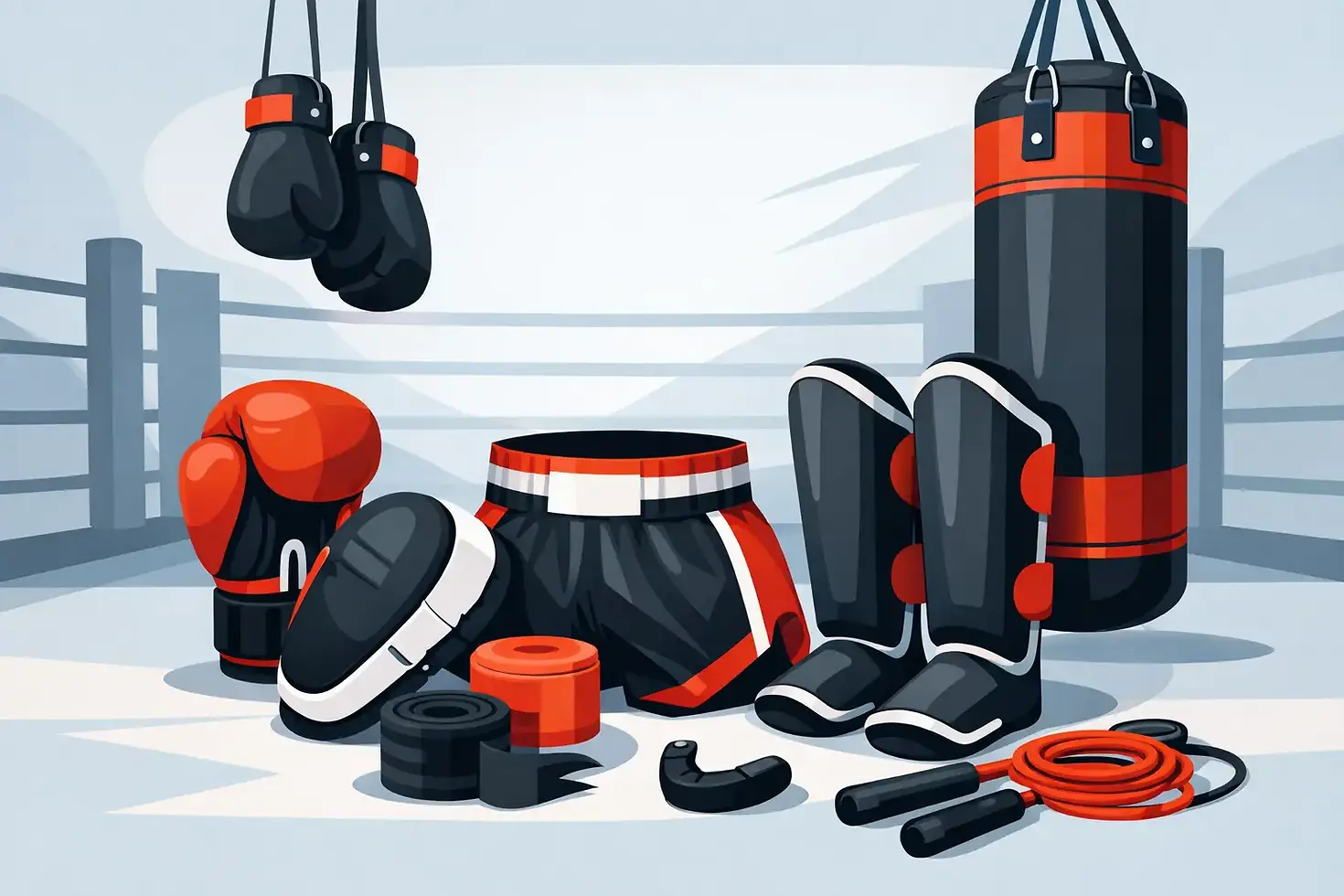
The first hard kick you check without proper shin protection, or the first round of pads in loose gloves, quickly shows why a proper Muay Thai equipment guide matters. Thai boxing is a full-contact striking sport. Your kit needs to protect you, your training partners and the coach holding pads, while still allowing you to punch, kick, clinch and move naturally.
You do not need to buy every item on day one. Start with the equipment your gym requires, then build a kit that suits how often you train and whether sparring or competition is on the horizon. Cheap gear that splits, shifts around or offers poor protection soon costs more than buying dependable equipment once.
Muay Thai Equipment Guide: Your Essential Kit
For most beginners, boxing gloves, hand wraps, a gumshield and shin guards are the core purchases. Add Muay Thai shorts and a water bottle, and you are covered for the majority of classes. If your gym supplies pads, there is no immediate need to buy your own, although regular trainees often prefer to have personal equipment.
As training becomes more serious, you may need a groin guard, headguard, ankle supports and separate gloves for bag work and sparring. Fighters preparing for interclubs or bouts may also need equipment that meets their gym, promoter or sanctioning body requirements. Always check first. Rules on glove weight, head protection and groin guards can vary between events.
Boxing gloves: choose for the job
Muay Thai gloves look similar to boxing gloves, but many have a more flexible hand compartment and a shorter cuff to make clinching easier. A good pair should secure firmly at the wrist, allow you to close your hand without fighting the padding and leave no painful pressure points across the knuckles or thumb.
For general adult training, 14oz or 16oz gloves are common choices. Heavier gloves offer more padding for sparring and pad rounds, which helps protect both hands and partners. Lighter gloves can suit bag work, drilling or competition where rules permit them. Your bodyweight, coach's preference and gym rules all matter, so there is no one weight that suits every fighter.
If you train several times each week, consider two pairs. Keep one pair for bag and pad work, where sweat and repeated impact break padding down fastest, and one clean, well-padded pair for sparring. Air gloves out after every session. Leaving them zipped inside a gym bag is the quickest route to a smell you cannot ignore.
Hand wraps: small item, serious protection
Hand wraps support the wrist and help stabilise the small bones of the hand under impact. They also absorb sweat, keeping gloves in better condition. For adults, longer wraps generally provide more coverage around the knuckles and wrist. Shorter wraps can work for younger athletes or people with smaller hands, but should still be applied securely.
Learn a wrapping method from your coach rather than pulling the wrap as tight as possible. Restricting circulation is not support. Your hand should feel stable when you make a fist, with fingers able to move and no tingling at the fingertips. Wash wraps regularly and keep a spare pair in your bag so there is never an excuse to train without them.
Shin guards for controlled sparring
Shin guards are non-negotiable once you begin sparring. Muay Thai includes kicks, checks and knees, and an unprotected shin-to-shin collision can stop training immediately. Look for padding that covers the shin bone properly, with protection across the instep if your gym uses full-contact sparring.
The right fit stays in place during kicks and checks. Guards that are too short leave exposed areas near the knee or ankle; guards that are too large twist around the leg and become a distraction. Fastening systems should feel secure without cutting into the calf. Some athletes prefer lighter, more mobile guards for technical rounds, while others need thicker protection for harder sparring. Match the guard to the intensity of your gym, not just its appearance.
A fitted gumshield is essential
A gumshield protects teeth and helps cushion the jaw during contact. It should fit closely enough to stay in place when you open your mouth and breathe through your nose. A loose gumshield is uncomfortable, makes communication harder and offers less reliable protection.
Even if your class is labelled technical or light sparring, wear one. Contact levels can change during drills, and accidental clashes happen. Keep it in a ventilated case, rinse it after use and replace it when it becomes damaged, chewed through or misshapen. For children, a correctly sized kids' gumshield is especially important. Adult protection cut down to fit is not a proper solution.
Protection for Sparring and Competition
A groin guard is sensible for male athletes during sparring, clinching and competition. It should sit securely under shorts without shifting when you knee, kick or change stance. Designs differ, from traditional Thai-style options to compression-supported cups, so choose the style permitted by your gym and event.
Headguards are not required in every Muay Thai gym or event. They can reduce cuts and soften some surface impact, but they do not make hard sparring risk-free. A headguard can also alter your vision and make clinch positions feel tighter. Use one when your coach, event rules or your training situation calls for it, but do not treat it as permission to take unnecessary shots.
Female athletes should also consider sport-specific chest protection where required or preferred. The key is freedom of movement. Protection that rides up, restricts breathing or catches during clinch work is not suitable for Thai boxing.
Pads and Training Tools for Home or Gym Use
Thai pads are built to absorb kicks, knees, punches and elbows from a partner. They need dense padding, solid handles and straps that keep the pad stable on the forearm. Focus mitts are useful for punching accuracy, timing and defensive reactions, but they are not designed to take repeated full-power round kicks.
For coaches and gyms, belly pads and body protectors make it possible to train knees, body punches and close-range combinations safely. They are practical investments when multiple athletes use them each day. Check stitching, strap strength and the quality of the impact foam before buying. Pads see a lot of abuse, and weak handles or compressed padding can make sessions less safe for both holder and striker.
A punch bag is useful for building output, balance and conditioning, but it does not replace partner work. A long Thai-style bag gives space for low kicks, knees and boxing combinations. If you train at home, make sure the mounting point, ceiling structure or stand is rated for the bag's weight and movement. A badly installed bag is a safety problem, not a training tool.
Clothing That Works for Thai Boxing
Muay Thai shorts are cut high at the sides to allow full kicks, knees and stance changes. They should sit securely at the waist without digging in or dropping during movement. Traditional shorter cuts work well for most Thai boxing sessions, while slightly longer styles may suit athletes who prefer more coverage.
For training tops, breathable T-shirts, vests and rashguards are practical choices. A rashguard can be particularly useful for clinch drilling because it is close fitting and less likely to be grabbed or bunched up. Avoid heavy cotton layers during hard sessions if they become soaked and restrict movement. Save hoodies and trousers for warming up, travelling and post-training recovery.
How to Buy the Right Size
Do not guess your size based on everyday clothing alone. Check the product measurements, especially for shin guards, shorts, groin guards and headguards. For shin protection, measure from below the knee to above the ankle. For gloves, hand size and intended use matter alongside bodyweight.
Try equipment on with the items you will actually wear in training. Test gloves over wrapped hands. Check shin guards while raising your knee and throwing a light kick. Make sure a groin guard fits under your preferred shorts. Good kit should feel secure from the first round, not require constant adjustment between combinations.
For children, prioritise fit and protection over buying larger sizes to grow into. Oversized gloves can strain small wrists, while loose shin guards move around and leave gaps. Kids' gloves, hand wraps and gumshields should match the child's current size and the contact level of their class.
Looking After Your Equipment
Wipe down gloves, shin guards and pads after every session, then let them dry fully in open air. Do not leave damp kit in a sealed bag or on a radiator, as extreme heat can damage materials. Wash wraps, training clothes and removable fabric components regularly.
Inspect your equipment before sparring. Replace gloves when the padding becomes uneven, straps fail or the inner lining tears. Retire shin guards if their foam has hardened, split or no longer stays in place. Reliable gear is part of being a responsible training partner.
Build your kit around the work you actually do. Start with quality gloves, wraps, a gumshield and shin guards, then add protection and training tools as your sessions progress. SIBIGA Fight Gear is built around that practical approach: equipment chosen for real rounds, not just for the gym bag.


Comments