


MMA Sparring Equipment Guide for Safer Rounds
- 3 days ago
- 6 min read
A good sparring round should test your timing, composure and decision-making - not leave your training partner unable to train tomorrow. This MMA sparring equipment guide covers the kit that matters most for controlled MMA rounds, from gloves and shin pads to gumshields, groin guards and the clothing that stays put when the round gets scrappy.
The right setup depends on your gym rules, your experience and what type of sparring you are doing. A light technical round does not demand the same protection as a hard striking session, while wall work and grappling create different demands again. Start with your coach's requirements, then choose equipment that protects both you and the person standing opposite you.
Start with gloves made for sparring
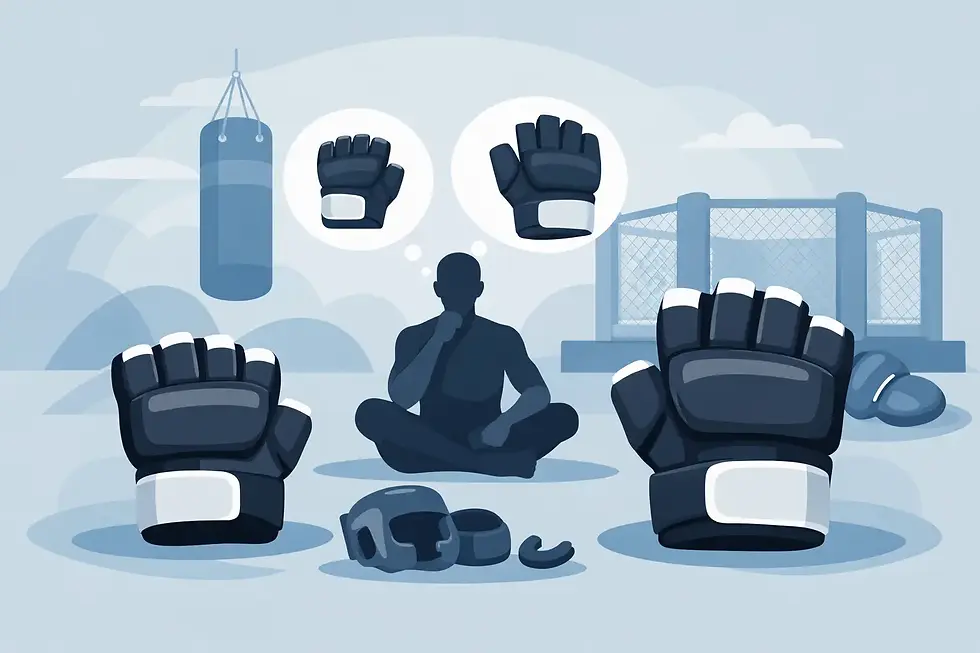
MMA sparring gloves are the centrepiece of your kit. They need enough padding to reduce the impact of punches while leaving your fingers free for clinching, takedowns and grappling exchanges. That balance is why competition gloves, small bag gloves and open-palm grappling gloves are poor choices for regular sparring.
For most MMA classes, a dedicated sparring glove with substantial knuckle padding is the sensible option. Many gyms favour 7oz gloves or heavier padded models for controlled striking. The exact weight is less important than the amount and distribution of padding, the quality of the wrist support and whether the gym permits them.
A glove should feel secure without cutting into your fingers or forcing your hand into an awkward position. Your fingertips should reach the end of the finger openings without being compressed, and the wrist strap should hold firm when you make a fist. If the glove rotates on your hand during punches, it is either too large or not secured properly.
Do not assume more padding gives permission to hit harder. Bigger gloves reduce some surface impact, but they do not make heavy, uncontrolled shots safe. Good sparring is built on restraint, clean technique and partners who can trust each other.
MMA gloves versus boxing gloves
Some gyms use boxing gloves for stand-up-only MMA sparring, especially when punches are being thrown with more intent. Boxing gloves spread impact across a larger padded surface and are often the better choice for a striking-focused session. They are less practical once takedowns, grip fighting and ground work are involved.
If your class alternates between striking and MMA rounds, owning both can make sense. Use boxing gloves when the session calls for them and padded MMA sparring gloves when clinching and grappling are part of the plan. Trying to make one glove work for every session usually means a compromise somewhere.
Hand wraps remain useful under either style of glove. They support the small bones of the hand and help stabilise the wrist, particularly if you are throwing regularly. Keep wraps clean, fully dry them after training and replace them when the fabric loses tension.
Shin pads are non-negotiable for MMA sparring
Kicks, checks and knee contact happen quickly in MMA, even in light rounds. A proper pair of shin pads protects the shin bone, reduces the force of accidental clashes and gives beginners more confidence to throw and check kicks correctly.
For MMA, look for shin pads that are secure but not overly bulky. A slim profile helps when wrestling, moving around the cage or working from the clinch. At the same time, very thin pads may not offer enough protection for regular kickboxing exchanges. The best choice sits firmly on the shin, stays in place when you pivot and does not leave hard edges exposed around the ankle.
Strap fastening and pull-on styles both have a place. Strap pads are easy to adjust and remove between rounds. Pull-on pads can feel tidier for grappling but need a close fit to stop them twisting. If you spend a lot of time drilling takedowns, ask whether your gym prefers one style over the other.
Check your shin pads before every session. Cracked foam, torn straps and rough exposed stitching can hurt a partner even when you are sparring responsibly. Training kit is protective equipment, not something to run into the ground.
Protect your mouth and groin
A well-fitted gumshield is essential. It protects teeth and helps reduce the risk of cuts to the lips and tongue when punches or kicks land unexpectedly. Boil-and-bite gumshields are a practical starting point, but they must be moulded carefully. A loose gumshield that falls out when you breathe or speak is not doing its job.
For regular sparring, a custom-fitted gumshield from a dental professional offers the most secure fit and is worth considering if you train often or are preparing for competition. Whichever option you use, keep it in a ventilated case and wash it after each session. Leaving it loose at the bottom of a gym bag is a quick route to a bad smell and a poor fit.
A groin guard is another essential for men in mixed sparring. Accidental knees, front kicks and scrambling pressure are part of the sport. Choose a guard designed for combat sports, with a secure support system that does not shift during sprawls or ground work. A guard that moves around is distracting at best and ineffective at the moment it is needed.
Women should choose protection according to personal comfort, gym requirements and the type of training being done. Compression shorts and suitable sportswear can add support and keep everything secure during wrestling and striking drills.
Do you need headgear for MMA sparring?
Headgear is not automatically required for every MMA gym. Some coaches use it for harder stand-up rounds or specific preparation phases, while others avoid it because it can obstruct vision, affect head movement and encourage fighters to take shots they should be avoiding.
If headgear is part of your gym's rules, choose a model that fits tightly without blocking peripheral vision or moving over your eyes. It should protect the forehead, cheeks and ears without making clinch work unnecessarily awkward. Headgear can help reduce superficial damage, but it does not prevent concussion. Good defence, controlled intensity and sensible coaching remain the real safeguards.
Clothing that works under pressure
MMA clothing needs to handle sweat, friction and constant changes of position. A close-fitting rashguard is a practical choice for grappling and mixed sessions because it is less likely to be grabbed or ridden up than a loose T-shirt. It also creates a barrier between your skin and shared mats.
Wear MMA shorts or grappling shorts with a secure waistband and no hard zips, pockets or loose fittings. Traditional fight shorts can work well if they allow a full range of motion for kicks, shots and guard work. Test them before a hard session: squat, kick, sprawl and bridge. If the waistband slides or the fabric catches, it will become a problem in sparring.
Remove jewellery, watches and anything with a hard edge. Keep nails short and clean. These are small details, but they prevent scratches and make training safer for everyone.
Build your kit around the sessions you actually do
A beginner attending mixed MMA classes usually needs padded sparring gloves, shin pads, a gumshield, groin protection where relevant, hand wraps and suitable training clothing. Add boxing gloves if the gym runs separate striking rounds. Headgear should be bought when your coach recommends it rather than treated as a universal requirement.
More experienced fighters may want separate gloves for drills, hard sparring, bag work and competition preparation. This keeps your sparring equipment cleaner, less worn and appropriate for its purpose. It also means you are not turning up for partner work with gloves hardened by months on the heavy bag.
SIBIGA Fight Gear stocks sport-specific equipment across MMA, boxing, Muay Thai and K-1, making it easier to build a setup that matches the way your gym trains rather than buying generic kit that does not suit the job.
Fit, hygiene and replacement matter as much as the purchase
Quality equipment only protects properly when it fits and is maintained. Air out gloves and shin pads after every session rather than sealing them in a bag. Wash rashguards, shorts and wraps straight after training. Wipe down gumshields and guards, then let them dry fully. Shared mats demand good hygiene from every member of the room.
Replace gloves when padding becomes compressed, straps stop fastening securely or the lining splits. Replace shin pads when the padding hardens, cracks or loses its shape. A damaged piece of kit can turn a controlled round into an avoidable injury.
Buy equipment that meets your current training needs, then let your coach and regular partners guide the next upgrade. The best sparring kit is the kit that lets you train consistently, protect your team-mates and return to the gym ready for the next round.


Comments